
Optical inspection equipment and traditional inspection equipment are both common means of industrial production, but they work differently and have different application scenarios.
Optical inspection equipment is a kind of equipment that uses optical technology to scan the surface of the product and judge whether it meets the production requirements, which can improve the production efficiency, reduce costs, and ensure product quality and performance. Optical inspection equipment mainly contains five major components: industrial lens, industrial camera, lighting system, image acquisition card and software processing system. It collects images through the cooperation of cameras and light sources, and analyses and processes them through algorithms to achieve product inspection. The advantages of optical inspection equipment include non-contact measurement, high speed, high accuracy, introduction of photoelectricity to improve process control, good stability, guarantee of production traceability, continuous operation and automatic sorting of defective products.
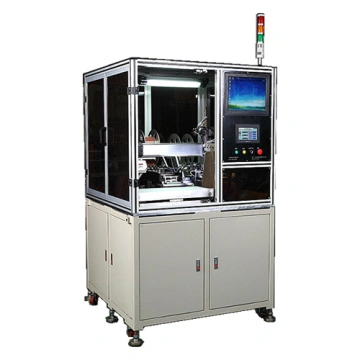
Traditional inspection equipment, on the other hand, is used to inspect products through manual operation or mechanical devices, such as the use of gauges and instruments. The advantages of traditional inspection equipment are simple operation and low cost, but it may not be suitable for occasions requiring high precision and complexity.
In practice, optical inspection equipment and traditional inspection equipment have their own advantages and disadvantages. The advantages of optical inspection equipment are high precision, high speed, non-contact measurement, which can achieve automated inspection and improve production efficiency and product quality. However, the cost of optical inspection equipment is higher, requiring professional technicians to operate and maintain. Traditional inspection equipment has the advantage of simple operation and low cost, but may not be suitable for occasions requiring high precision and complexity.
In general, optical inspection equipment and traditional inspection equipment have their own advantages and disadvantages, the choice of which inspection equipment depends on the specific production needs and product characteristics. In some of the high precision requirements, the need for automated inspection occasions, optical inspection equipment is a better choice. In some simple inspection tasks, traditional inspection equipment is more practical. With the continuous progress of technology, optical inspection equipment will continue to play an increasingly important role in the manufacturing industry.